
User Interface Design: The Art and Architecture of Interaction
User Interface Design (UI) is where aesthetics and functionality converge. It’s the tactile, visual, and emotional front door to any digital product—what users see, touch, and interpret. While much of the user experience happens behind the scenes, the interface is where it becomes visible, tangible, and real. UI design is not just the finishing layer—it is the mediator between systems and people, a translator of complex logic into intuitive interaction.
At its core, UI design is about communication. Every button, scroll, gesture, transition, and type treatment speaks to the user. And what it says matters. Poorly designed interfaces confuse, frustrate, and repel. Well-crafted interfaces invite exploration, build confidence, and guide users to outcomes with ease. But that ease is often the result of hard thinking—a deliberate process of visual reasoning and structural clarity.
UI design is not merely about making things look better. It’s about making them work better by looking right. Visual hierarchy, contrast, spatial organization, rhythm, and consistency are not ornamental concerns; they are usability principles disguised as design elements. The placement of a search icon or the behavior of a dropdown menu can determine whether a user finds what they need—or gives up entirely. That’s the power and responsibility of UI design.
The process begins with understanding—of the user, the content, the environment, and the technology. Interfaces are never designed in isolation. They exist within systems, and they carry the brand’s DNA. That means UI design must harmonize with identity, voice, accessibility standards, and performance constraints, all while solving for goals that shift over time. A static UI is a dying one. Interfaces, like users, must evolve.
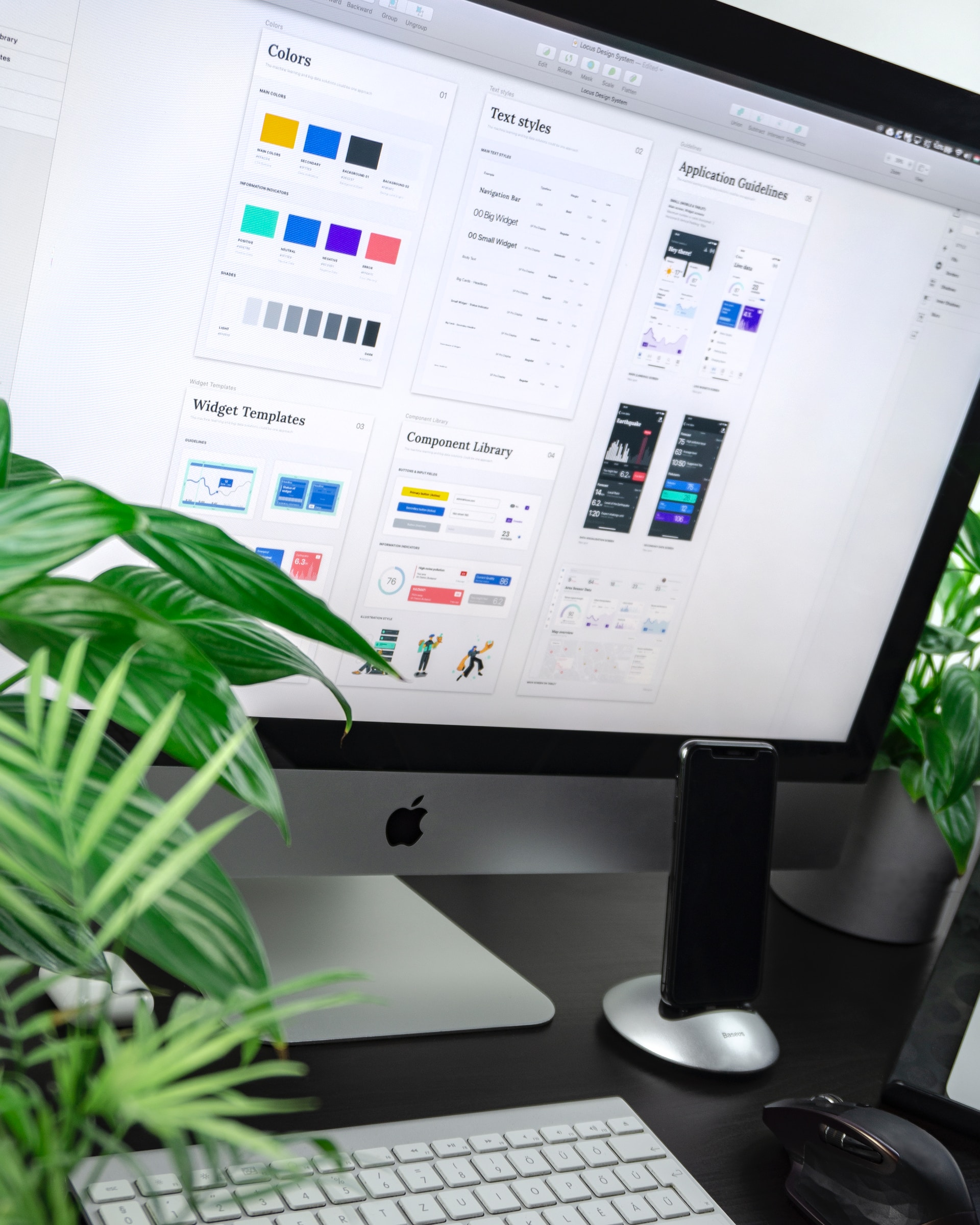
Modern UI design is driven by responsiveness and adaptability. It’s no longer enough to design for a screen in a fixed dimension. Interfaces must fluidly scale across devices, adapt to changing contexts, and remain legible and coherent under variable conditions. That means embracing modularity and systems thinking. Designing components rather than pages. Designing relationships between patterns rather than individual elements. The future of UI design is systemized, atomic, and anticipatory.
But design systems alone aren’t the answer. They’re tools, not truths. Great interfaces are still the result of intuition, iteration, and empathy. A well-documented component doesn’t guarantee a well-designed experience. It must be tested, questioned, and shaped by real interaction. UI design thrives in loops—create, test, learn, refine. It requires a willingness to challenge assumptions and an openness to feedback that reshapes structure as much as visuals.
Color, type, spacing, iconography—all of these details might seem cosmetic at first glance, but they carry immense cognitive weight. A misused icon introduces uncertainty. A poorly chosen font slows readability. An inconsistent color scheme breaks trust. The visual layer is where confidence is won or lost. It is where users decide if they believe in the product, even before they understand it. UI is emotion translated into form.
Yet, UI design doesn’t stop at screens. Interfaces are increasingly ambient, voice-activated, gestural, or wearable. The principles remain, even as the surfaces change. Clarity, affordance, feedback, and consistency apply just as much to a smartwatch as they do to a touchscreen dashboard or AR overlay. The future of UI will depend on how well designers can extend their thinking beyond the flat screen and into environments where design is no longer seen—but felt.
In every digital product, the UI is where the story comes alive. It’s where brand, behavior, and technology come together to shape perception. A great interface doesn’t just make things easier—it makes things possible. It empowers users by removing friction, by making them feel smart, in control, and respected. When the interface disappears, the experience is at its best.
UI design is ultimately about clarity. Not in the sense of minimalism or reduction, but in helping people understand where they are, what they can do, and what happens next. It’s the choreography of interaction. It’s the visual and functional clarity that lets a user navigate complex systems with confidence. That clarity doesn’t happen by chance. It happens by design.
In collaborative environments—especially within interdisciplinary teams—UI becomes the common language that unites developers, strategists, and creatives. It’s where decisions become visible. It’s where the vision gets tested against reality. And when done well, UI becomes the layer where innovation meets comprehension. It’s not about complexity. It’s about resonance.
As we move deeper into an era defined by artificial intelligence, automation, and adaptive content, the role of UI design will continue to grow in significance. Machine learning may optimize behaviors behind the scenes, but it’s the interface that determines whether users trust what they see. A transparent, ethical, and well-designed interface is how technology earns human confidence.
So much of UI design today is driven by templates, trends, and tooling. But what separates good from great is the thinking behind it. The willingness to go deeper. To prototype differently. To resist shortcuts. To care about the space between letters as much as the logic behind navigation. Because every pixel, every microinteraction, and every pause in animation has the potential to shape experience.
That’s the craft of user interface design. It’s a discipline of details. It’s not decoration—it’s architecture. Not just aesthetics, but semantics. It’s where interaction begins, and where trust is built, one click—or touch—at a time.
Our published articles are dedicated to the design and the language of design. VERSIONS®, focuses on elaborating and consolidating information about design as a discipline in various forms. With historical theories, modern tools and available data — we study, analyze, examine and iterate on visual communication language, with a goal to document and contribute to industry advancements and individual innovation. With the available information, you can conclude practical sequences of action that may inspire you to practice design disciplines in current digital and print ecosystems with version-focused methodologies that promote iterative innovations.
Related Articles –
-

Crafting Captivating and User-Friendly Interface Elements
-
Understanding UI Affordances: Creating Intuitive and User-Friendly Interfaces
-

The Dawn of Invisible UI: A New Frontier in User Experience Design with ChatGPT
-

The Art and Science of UI Design: A Guide to Effective Interface Creation
-
The Future of User Experience
-

Designing Meaning: How UI Elements Create the Narrative of Digital Experience
-

Linguistic User Interface Design: Creating Inclusive Digital Experiences
-
Applying Social Proof to Your Web Design
-

Balancing Content and Simplicity in UI Design
-

UI Fundamentals for Mobile App Design