
Versions: The Hidden Framework Behind Progress
In the world of design, technology, and systems development, nothing significant happens in a single stroke. Great ideas don’t just appear fully formed—they unfold. They are revised, tested, and refined through a process of iteration. And at the core of that process is the quiet but powerful mechanism of versions.
Whether you’re shaping a design language, developing a digital product, or evolving a brand ecosystem, versions act as checkpoints of progress. They allow teams to explore, compare, and critique possibilities. They document growth. They capture intent. And they help ensure that nothing gets lost in translation—between disciplines, collaborators, or moments in time.
More Than Just a Number
Versioning isn’t just a naming convention—v1.0, v2.3, vFinal-final-FINAL—it’s a mindset. It represents an acknowledgment that no solution is perfect from the outset. It creates space for feedback, adaptation, and evolution. In this way, versioning supports a culture of learning and agility—especially important in complex, multi-stakeholder projects.
For designers, a new version might represent a subtle tweak to spacing or a full overhaul of hierarchy. For engineers, it could mean a performance optimization or a structural rewrite. For strategists, it could mean shifting positioning or tone. The point is: each version reflects a moment of clarity—a deliberate step in the right direction.
A Bridge Between Disciplines
Versions create a shared language across disciplines. In a collaborative environment, where design, development, content, and business strategy converge, versioning helps manage complexity. It gives context to change. When a UI shifts from version 2.4 to 2.5, it’s not just about pixels moving—it might represent a research-informed improvement, a user behavior insight, or a new business need.
This clarity is crucial. Without it, updates can feel arbitrary. With it, each team member understands not just whatchanged, but why—and that fosters alignment and trust.
Interface, Code, and Continuity
In product and digital environments, version control systems like Git are essential for managing technical progress. But versioning in design goes beyond code repositories. It’s about how prototypes evolve. How accessibility improvements are tracked. How visual systems adapt across screen sizes, languages, or platforms.
Versioning ensures continuity even as you embrace change. It helps you return to a prior state when something doesn’t work out. It enables A/B testing. It powers agile workflows. And when paired with documentation, it tells the story of your product’s growth—why certain decisions were made, what alternatives were tried, and how the final experience came to be.
The Human Side of Versions
Versions also reflect human behavior. People change their minds. Organizations shift priorities. Markets evolve. And users adapt in ways we can’t always predict. Embracing versioning means recognizing that evolution is not a failure of planning—it’s a sign of responsiveness.
Designers sometimes resist showing early versions. They want to polish before sharing. But withholding process is a missed opportunity. Early versions are messy, but they’re valuable. They reveal thinking. They invite dialogue. They open up a space for better ideas to surface.
Versions and Systems Thinking
When you step back and see how versioning works at scale—across systems, platforms, and timelines—it becomes clear that it’s more than a workflow technique. It’s a way of structuring growth. It ensures modularity and traceability. It allows ecosystems to evolve without breaking. And when archived properly, it serves as a legacy—a blueprint of how something came to be, and why.
In this sense, versioning isn’t just a method. It’s architecture. It’s memory. It’s foresight.
Why Versions Matter Now More Than Ever
Today’s digital products are never truly done. They live in environments that shift constantly—new devices, new standards, new user behaviors, new threats. In this climate, static thinking is a liability. Versioning enables resilience. It prepares systems to adapt. It keeps teams aligned without locking them into inflexible paths.
It also feeds into design systems, where versioned components allow for updates without ripple effects breaking the entire UI. It powers modular content strategies, scalable dev ops, and even multi-brand ecosystems where each brand can evolve at its own pace while staying true to a master identity.
Final Thought
The reason our platform—and our brand—is called VERSIONS® is rooted in a belief we’ve held from the beginning.
Long before versioning became part of everyday workflows or interface discussions, it was something quiet—something tucked away in software release logs. But we saw its deeper potential. We recognized that versions were more than incremental updates or version control tags—they represented intention, reflection, and growth. They held the DNA of iteration. And to us, iteration isn’t just a process—it’s a philosophy.
Our mission has always been to make software and systems more human-centered. To bridge the gap between machine logic and human experience. To push digital interactions to feel natural, intuitive, even empathetic. And we knew that could only happen through continuous refinement—through a culture of improvement, where we’re never done and never satisfied.
To iterate is to evolve. It means constantly learning, refining our craft, and designing not just for what’s possible now, but for what’s better next. That’s why we named our platform VERSIONS. It’s why we research, document, and share our process openly. It’s why we treat every product as a living system—not a fixed outcome.
We believe that design can move industries forward. That user experience can shape behavior, drive innovation, and build trust. And we know that none of that happens in a single take.
It happens—always—in versions.
Our published articles are dedicated to the design and the language of design. VERSIONS®, focuses on elaborating and consolidating information about design as a discipline in various forms. With historical theories, modern tools and available data — we study, analyze, examine and iterate on visual communication language, with a goal to document and contribute to industry advancements and individual innovation. With the available information, you can conclude practical sequences of action that may inspire you to practice design disciplines in current digital and print ecosystems with version-focused methodologies that promote iterative innovations.
Related Articles –
-

The Engine of Design Evolution
-
How to Create and Use User Personas During the UI/UX Project
-
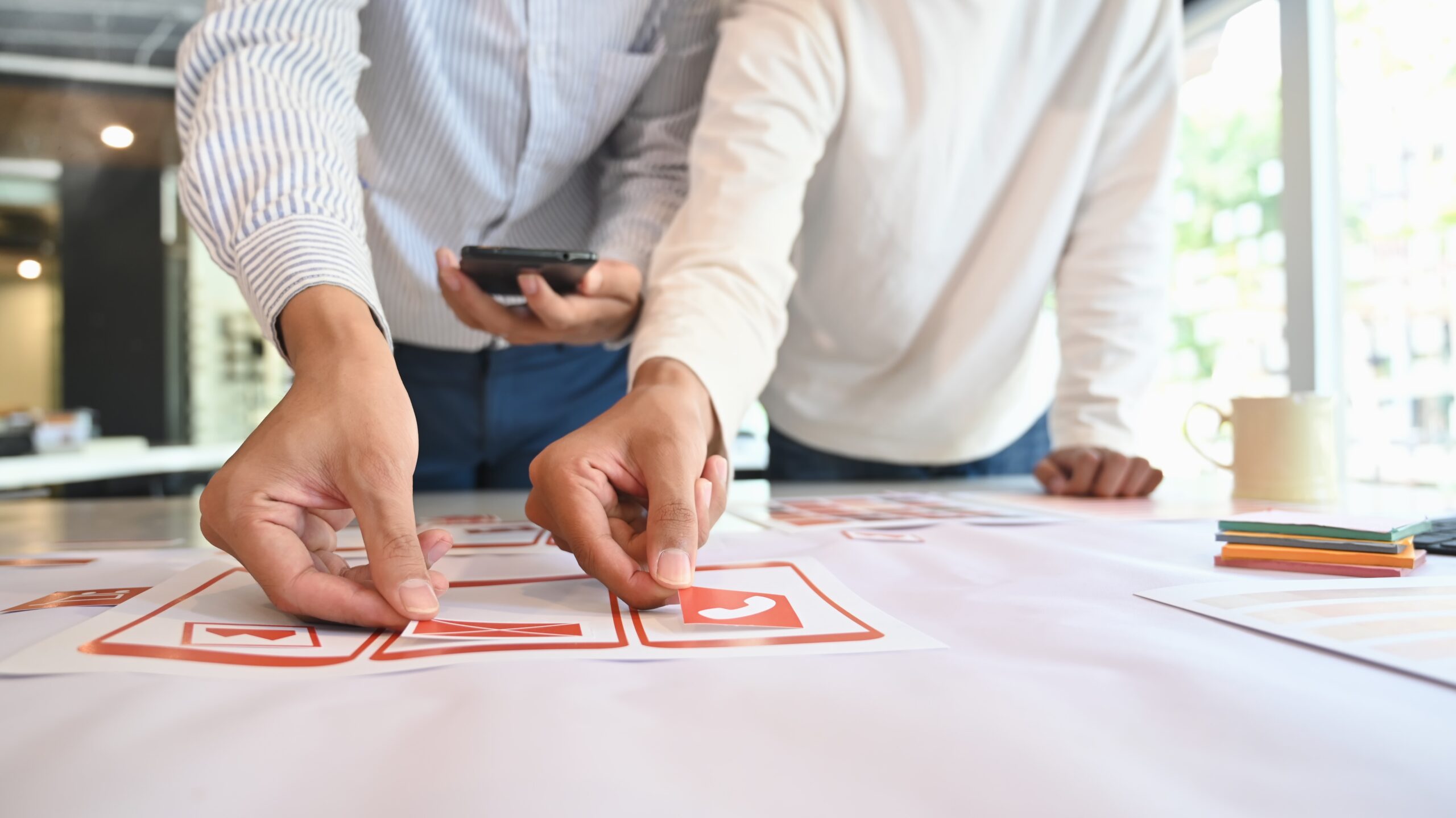
Inside a Global UX Design Agency
-

Respond to Today – Design for Tomorrow
-

Innovation is the Pursuit of a Seismic Shift in Experience
-

Accessibility, Usability, and Inclusion: Enhancing the Web Experience for All
-
Branding: Resonate With An Audience
-

Contextual Media, Influence And Reach
-

Regenerate
-
Content